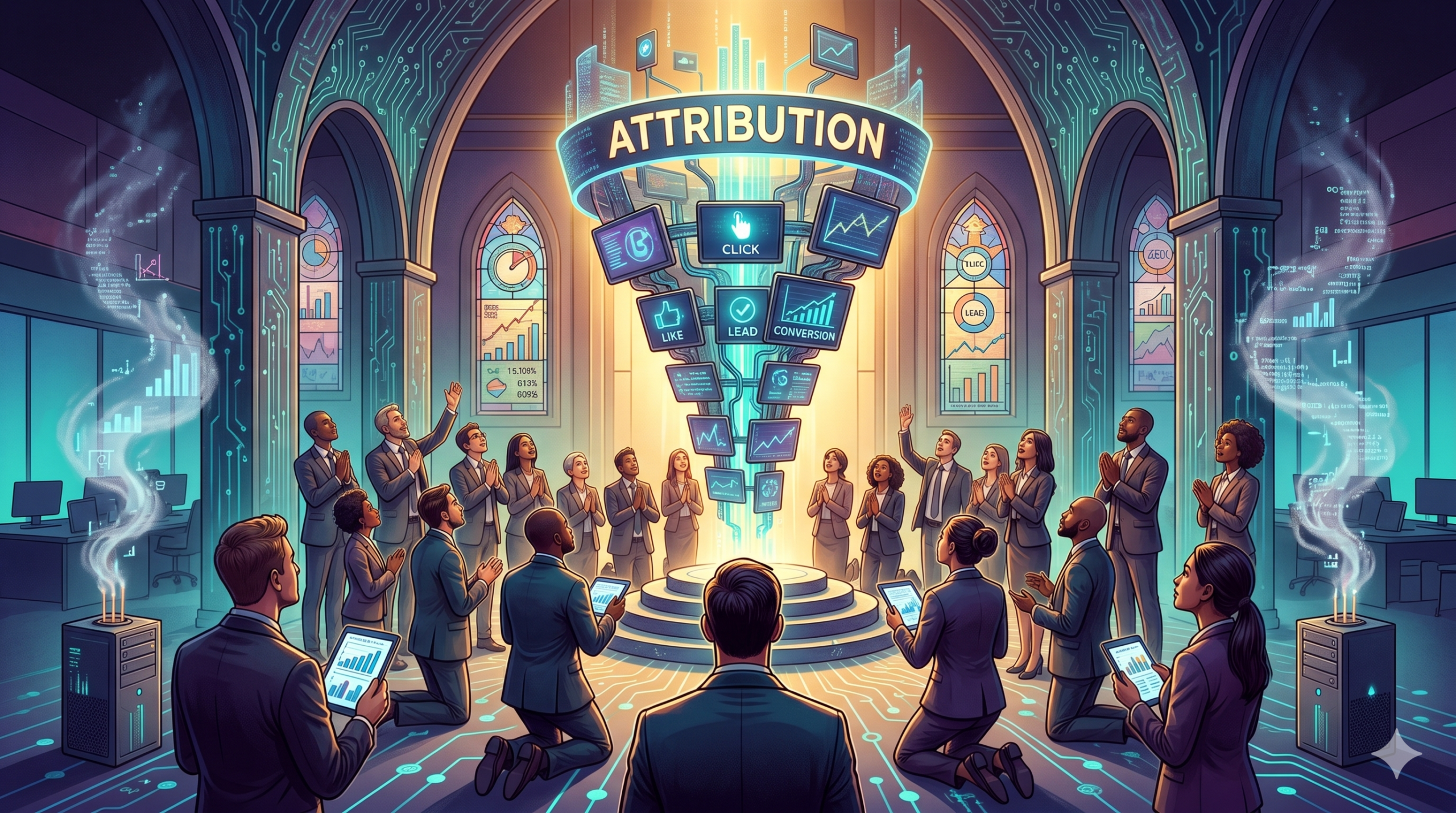
Walk into most B2B marketing teams in 2026 and you will find them debating attribution models.
First-touch. Last-touch. Multi-touch. Time-decay. W-shaped. U-shaped. Markov chain. Every team has a favorite, and every team is sure that if they could just get the model right, they would finally know which channel “really” works.
This is the marketing equivalent of arguing about astrology charts.
What attribution can and can’t do
Attribution can tell you correlations. It can tell you which channels were touched on the way to a deal. It cannot tell you which ones caused the deal. Causation is not in the data.
The best CMOs I know don’t ignore attribution. They use it as one signal among many. They also use sales feedback, customer interviews, sequence analysis, and basic common sense about how their market actually thinks.
Attribution can show you correlations. It cannot show you causation. Most marketing teams treat the two as the same thing.
The teams that worship attribution have one thing in common: they are usually using it to avoid making judgment calls. The model becomes a way to outsource the decision. “The data says we should double down on paid social” — when what’s actually happening is they’re afraid to advocate for their own thinking.
The honest version is: I think we should double down on paid social, here’s why, and here are the signals I’m reading. Then attribution becomes one of several inputs, not the source of truth.
This is the work that AI can’t do for you, by the way. Models can produce attribution outputs. They cannot tell you what’s actually happening in your market. That part is still a human’s job.